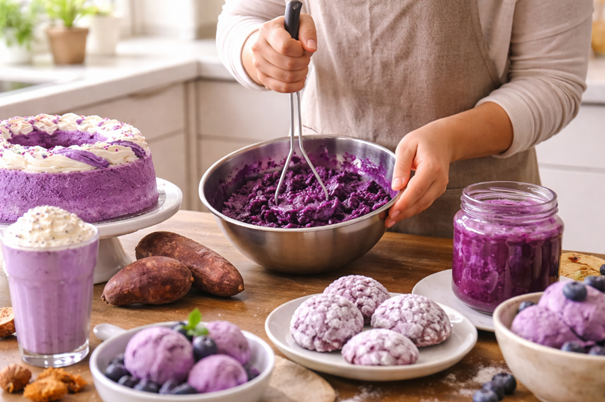
Ube stands out the moment you see it. Its deep violet colour feels almost electric, its flavour gently sweet with notes that remind many people of vanilla and toasted nuts. If you have been wondering what to actually cook with ube, you are not alone. Many home cooks in Canada are searching for concrete recipes that truly highlight its texture and taste. The goal here is simple: give you clear, precise ideas you can use immediately in your kitchen. No vague suggestions. No repetition. Just reliable preparations that work. Whether you plan to bake, blend, freeze, or steam, ube offers versatility that few ingredients can match. Think of it as a culinary canvas that holds colour and flavour in equal measure. When used correctly, it transforms simple desserts into memorable creations.
Why ube works so well in desserts?
Ube, also known as purple yam, is widely used in Filipino cuisine. Its natural sweetness makes it especially suitable for desserts, yet it does not overpower other ingredients. The texture becomes smooth and creamy once cooked and mashed, which explains why it pairs so well with dairy, coconut milk, and condensed milk. In Canada, ube is often available as frozen grated yam, powder, extract, or ready-made jam. Each form behaves differently in recipes. Fresh or frozen ube delivers the most authentic flavour and colour. Powder works well for dry mixes such as pancakes or cookies. Extract enhances aroma without changing texture.
The reason ube recipes succeed lies in balance. Its flavour is subtle, so pairing it with ingredients that complement rather than dominate is essential. Coconut, white chocolate, cream cheese, and butter enhance its richness without masking its profile.
- Ube halaya
- Ube chiffon cake
- Ube ice cream
- Ube pancakes
- Ube crinkles
These preparations are among the most searched options because they allow ube’s colour and texture to shine clearly.
Ube halaya: the foundation recipe
Ube halaya remains the most essential preparation. It is a thick, glossy jam made from mashed ube, condensed milk, butter, and sometimes coconut milk. The cooking process requires patience. Low heat prevents burning while constant stirring ensures a smooth consistency. The final texture should be dense yet spreadable. When done properly, it holds its shape on a spoon and releases a subtle aroma. This base can be eaten on its own, spread on toast, layered in cakes, or used as filling.
For home cooks in Canada looking for quality ingredients, sourcing good ube makes a noticeable difference in colour intensity and flavour depth. A well-prepared halaya serves as the backbone for multiple desserts. The key detail lies in moisture control. Overcooking dries the mixture. Undercooking leaves it too loose. Stirring continuously helps achieve that silky finish that defines authentic halaya.
Ube cake and baked goods
Ube cake has become extremely popular because of its visual impact. A classic ube chiffon cake combines whipped egg whites with ube puree, producing a light and airy crumb. The purple interior creates a striking contrast against white frosting. Cream cheese frosting works particularly well because its slight tang balances the sweetness. Canadian bakers often adapt the recipe by reducing sugar slightly, allowing the yam flavour to remain present rather than overly sweet.
Cookies made with ube powder offer another accessible option. The dough takes on a pastel violet hue. When baked correctly, the cookies remain soft in the centre with lightly crisp edges. The addition of white chocolate chips enhances both texture and flavour contrast.
Texture control in baking
Ube puree adds moisture. Recipes must account for that. Reducing other liquid components prevents cakes from becoming dense. Measuring carefully ensures a balanced batter.
Colour preservation tips
Overbaking can dull the purple shade. Moderate oven temperatures maintain vibrancy. Adding a small amount of acid, such as lemon juice, sometimes helps stabilize colour during baking.
Frozen and creamy ube desserts
Ube ice cream remains one of the most beloved variations. Its smooth, custard-like texture pairs beautifully with the yam’s mild sweetness. When churned properly, the result feels rich without heaviness. Combining ube with coconut milk creates a dairy-free version that still delivers creaminess. The coconut enhances flavour depth without overwhelming the yam. For best results, blending the puree thoroughly before freezing prevents graininess. Ube milkshakes and lattes have also gained popularity in Canadian cafés. The flavour remains subtle yet distinctive. Think of it as a soft echo of vanilla with a deeper undertone.
Creative Canadian twists with ube
Innovation does not stop at traditional Filipino desserts. Canadian cooks are incorporating ube into cheesecakes, doughnuts, macarons, and even waffles. Ube cheesecake blends the creamy tang of cream cheese with the earthy sweetness of the yam, resulting in a dessert that feels familiar yet new. Ube waffles offer a colourful brunch option. The batter incorporates puree directly, producing fluffy waffles with a crisp exterior. Maple syrup complements the flavour beautifully, creating a subtle fusion between Filipino heritage and Canadian identity. Using ube in layered parfaits with whipped cream and fresh berries introduces acidity and freshness. The colour contrast alone makes it visually striking.
How to choose the right form of ube
Selecting the correct form depends on the recipe. Frozen grated ube provides authenticity. Powder suits dry mixes. Extract intensifies aroma in frostings and beverages. Pre-made halaya works when time is limited. Texture remains the most important factor. If the goal is a creamy dessert, puree delivers superior results. If baking cookies or pancakes, powder integrates more evenly into flour-based mixtures.
Ube offers far more than its vibrant colour. Its versatility allows home cooks across Canada to experiment confidently, whether preparing traditional halaya, airy cakes, or modern frozen treats. With proper balance and attention to texture, ube transforms everyday desserts into something memorable. What recipe will you try first?