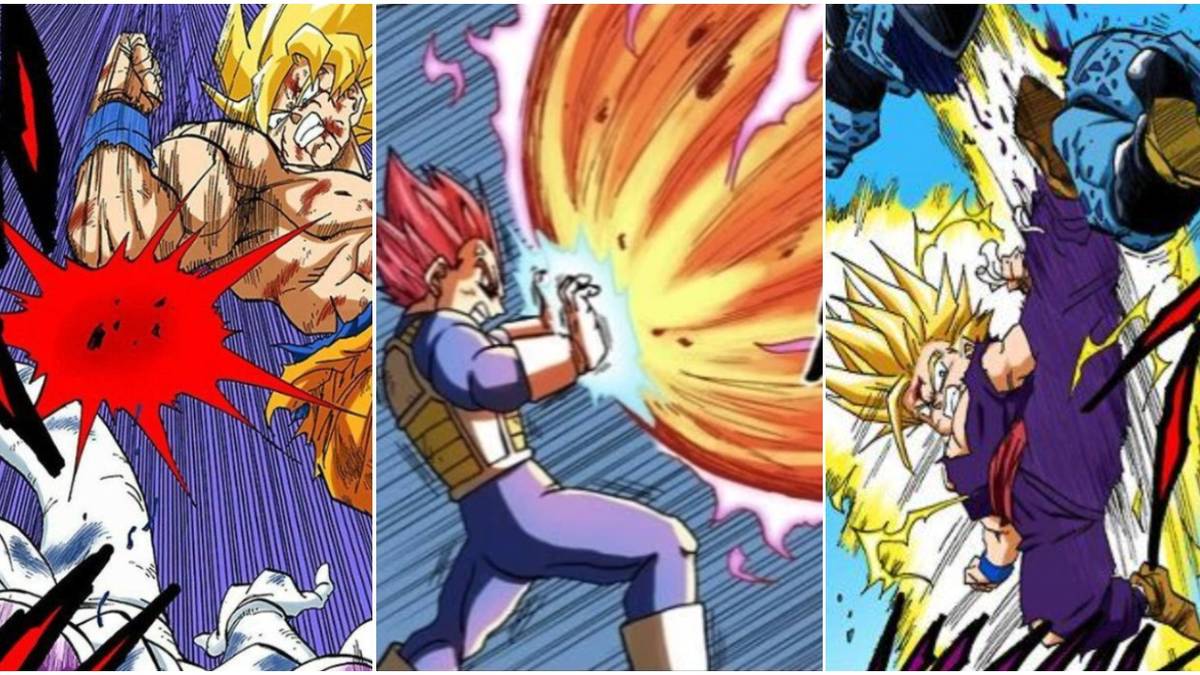
Few manga have shaped global pop culture like Dragon Ball Z. Behind the iconic transformations, energy blasts, and legendary rivalries lies a structured narrative built on legacy, sacrifice, and constant evolution. If you want to clearly understand what Dragon Ball Z is really about its timeline, its major arcs, and the meaning behind its battles — this complete breakdown will guide you through every key moment. The story unfolds as a saga of identity and responsibility, where each fight raises the stakes not only for Earth but for the entire universe. Much like a storm gathering strength on the horizon, the plot expands arc after arc, pushing its characters into new dimensions of power and moral conflict. By exploring the Saiyan saga, the battle against Frieza, the Android threat, and the Majin Buu catastrophe, you’ll gain a precise understanding of how Dragon Ball Z builds one of the most influential narratives in manga history.
The Saiyan revelation and the beginning of a new era
The story of Dragon Ball Z begins with a revelation that reshapes everything readers thought they knew about Goku. Until this moment, he was perceived as a gifted martial artist with unusual strength. The arrival of Raditz exposes the truth: Goku is a Saiyan, a member of a warrior race that conquers planets. This turning point introduces the central theme of identity. Goku must reconcile his peaceful upbringing on Earth with his violent biological origins.
Raditz’s defeat comes at a high cost. Goku sacrifices his own life to protect his son, Gohan, and his friends. This establishes a recurring pattern in the manga: victory often requires sacrifice. The stakes escalate when Vegeta and Nappa, two elite Saiyans, arrive on Earth seeking the Dragon Balls. Their invasion shifts the tone of the story from martial arts adventure to large-scale planetary threat.
Vegeta’s introduction is crucial. He embodies pride, ambition, and ruthless determination. His rivalry with Goku becomes one of the core dynamics of the series. Unlike a simple antagonist, Vegeta evolves over time, reflecting the broader narrative arc of transformation that defines Dragon Ball Z. This saga also introduces the concept of power levels, measured through scouters. Strength is no longer abstract; it becomes quantifiable, fueling competition and tension. The Saiyan arc ends with Vegeta’s retreat, leaving Earth devastated yet victorious. The horizon, however, widens beyond Earth. The heroes learn of Namek and the origins of the Dragon Balls, setting the stage for a cosmic confrontation.
The Namek conflict and Frieza’s tyranny
The journey to Planet Namek marks the transition from terrestrial battles to intergalactic warfare. The central antagonist, Frieza, is introduced as a galactic emperor responsible for the destruction of the Saiyan race. His presence redefines villainy in the series: calm, calculated, and overwhelmingly powerful. On Namek, the stakes become existential. The Dragon Balls are no longer simply tools to revive fallen allies; they represent hope against extinction. Vegeta returns with personal motives. He seeks immortality and revenge against Frieza. This layered conflict adds strategic tension, as alliances shift temporarily between former enemies.
The emotional climax arrives when Frieza kills Krillin. This act triggers Goku’s legendary transformation into a Super Saiyan. The golden-haired warrior standing against tyranny becomes one of the most iconic moments in manga history. The transformation symbolizes unleashed potential and righteous fury. It also marks a shift in the series’ scale. From this point forward, each new enemy demands even greater strength.
For fans who want to bring this iconic arc into their collection, high-quality anime figures often depict Goku’s first Super Saiyan transformation with striking accuracy, capturing the emotional intensity of that defining battle. Frieza’s defeat closes the Namek saga, yet the narrative does not return to simplicity. Instead, it introduces the idea that power can always rise higher.
The Android threat and the rise of Cell
After Frieza’s downfall, the story pivots unexpectedly. A mysterious future warrior, Trunks, arrives with a warning: powerful Androids will soon attack Earth. This arc introduces time travel, expanding the narrative complexity. The threat is no longer immediate destruction alone but a dystopian future shaped by technological monstrosity. The Android saga evolves into the Cell arc. Cell, a bio-engineered organism created from the DNA of the strongest fighters, represents synthesis and escalation. He absorbs Android 17 and 18 to achieve his perfect form, echoing the theme of evolution through conflict.
Gohan’s hidden potential
A major turning point occurs during the Cell Games. Goku entrusts the final battle to his son, Gohan. Until this moment, Gohan’s power had surfaced only in bursts. Facing Cell’s cruelty, he ascends to Super Saiyan 2. Lightning crackles around him as he surpasses his father. The narrative shifts from inherited strength to realized potential. Gohan’s victory reinforces the idea that the next generation can rise beyond the previous one.
Vegeta’s internal conflict
Vegeta’s pride clashes with his growing attachment to Earth and his family. His moment of self-awareness during the Cell Games hints at deeper character development. He is no longer solely driven by rivalry but by responsibility. This complexity enriches the storyline, adding emotional resonance to the relentless battles. Collectors often gravitate toward detailed Dragon Ball figures that portray Gohan’s Super Saiyan 2 stance or Cell’s perfect form, visual reminders of this arc’s dramatic intensity.
This saga closes with Goku’s second sacrifice, reinforcing the recurring motif of protection through selflessness.
The Majin Buu saga and the ultimate test
Years later, peace proves temporary. The wizard Babidi unleashes Majin Buu, a chaotic entity capable of destruction on a planetary scale. Unlike previous villains, Buu embodies unpredictability. His transformations alter his personality and power dramatically. This arc emphasizes fusion, introducing techniques like Gotenks and Vegito. Fusion symbolizes cooperation surpassing individual strength. Goku achieves Super Saiyan 3, pushing physical limits at great energy cost. The final battle against Kid Buu unites Earth’s population in a Spirit Bomb, highlighting collective effort as the ultimate weapon. Key elements of this saga include:
- Fusion technique
- Super Saiyan 3
- Majin transformation
- Spirit Bomb finale
The defeat of Kid Buu restores balance. Goku wishes for Buu’s reincarnation, leading to Uub’s introduction. The cycle of growth continues, suggesting that strength and challenge are eternal companions.
Why Dragon Ball Z remains culturally influential
The enduring impact of Dragon Ball Z lies in its structured escalation and emotional clarity. Each arc builds logically upon the previous one. The narrative revolves around three central themes: identity, surpassing limits, and protecting others. Battles are not random spectacles; they reflect character evolution. The manga’s pacing alternates between training, revelation, and confrontation. This rhythm keeps tension alive while allowing space for transformation. Like a flame constantly fed by new oxygen, the story never stagnates. Its legacy continues to inspire sequels, adaptations, and global fandom.
Dragon Ball Z tells more than a sequence of fights. It narrates a journey of self-discovery, resilience, and legacy. From Saiyan origins to universal salvation, its story remains a benchmark in manga storytelling. What moment defined the series for you — Goku’s first Super Saiyan transformation, Gohan’s awakening, or the final Spirit Bomb? Revisiting these arcs often reveals new layers with each reading.